
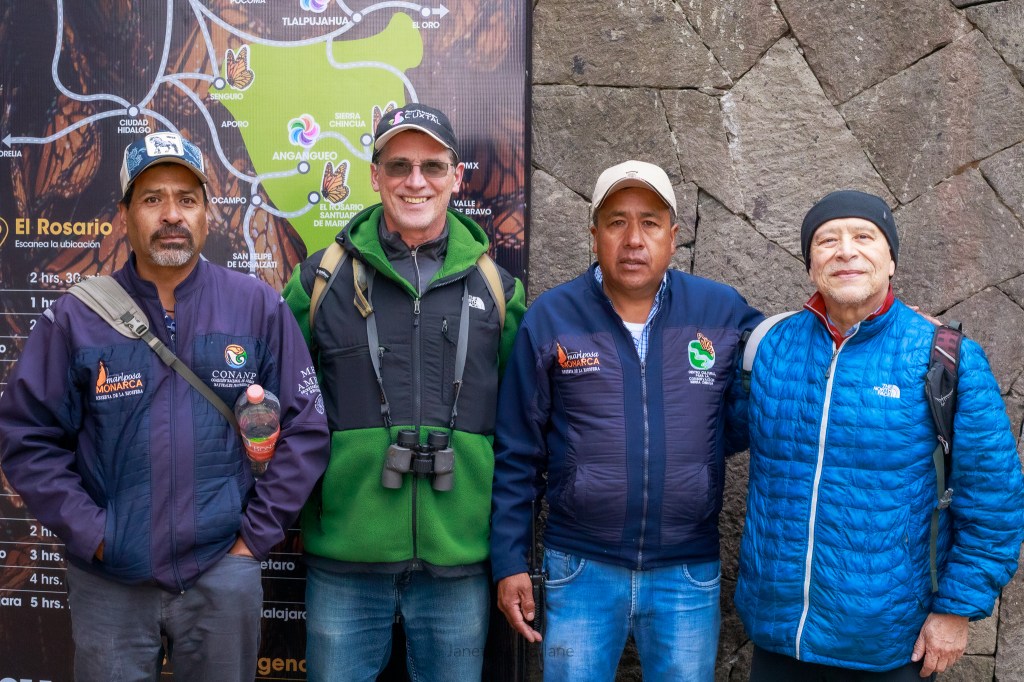
Our journey began in Mexico city. We left the comforts of our lovely hotel,Casa Tamayo, in the Coyoacán neighborhood of Mexico City. I tagged along with my husband,Dr. David MacFarlane, a professor of Forestry and his colleague, Dr. David Mota-Sanchez, a professor of Entymology, both at Michigan State University. Together, they have been collaborating on a project with the local communities living within and around the Monarch Biosphere Reserve.
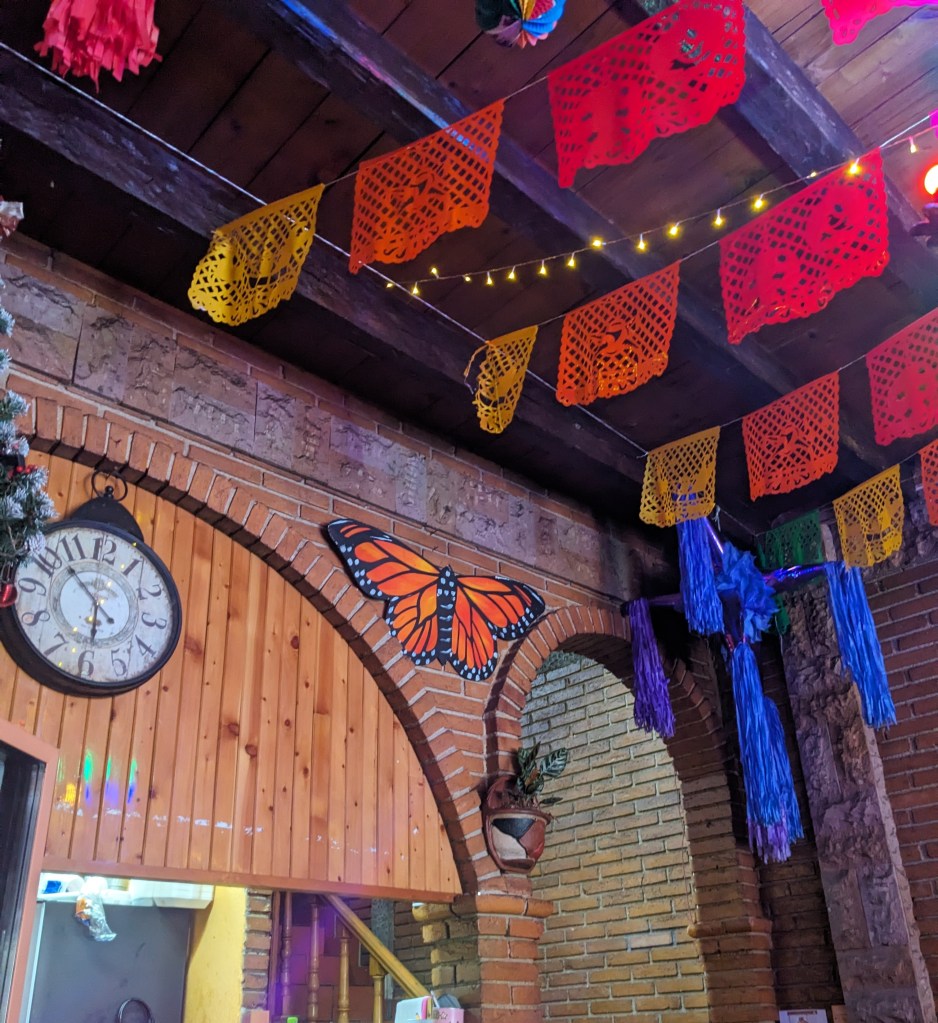
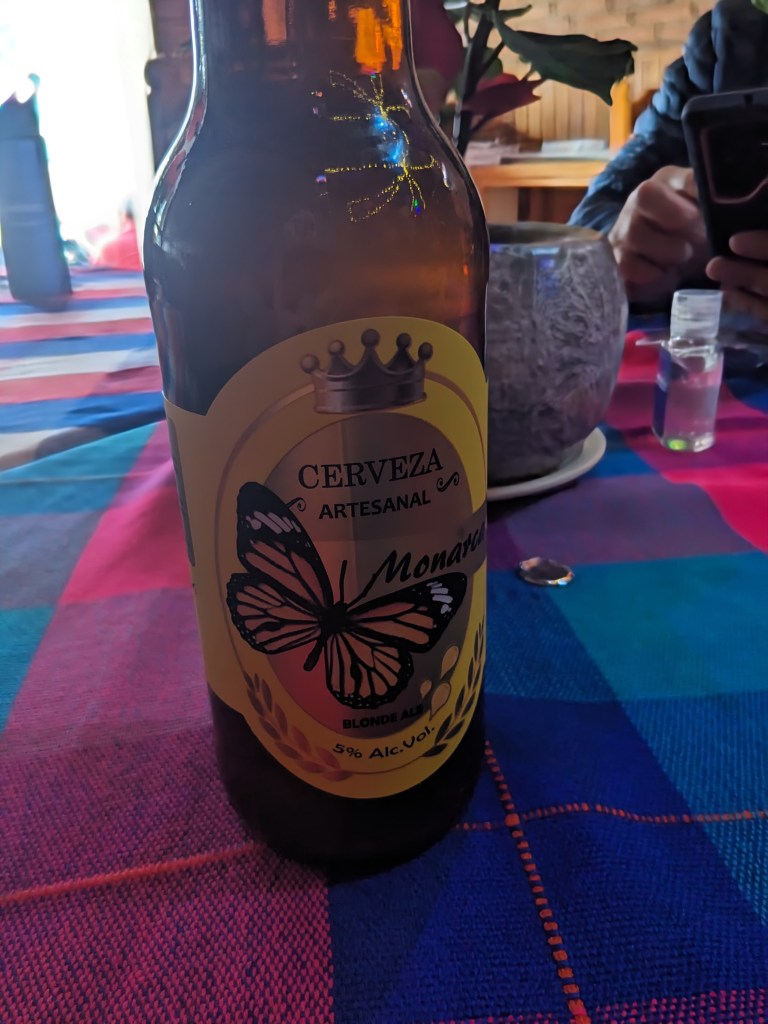
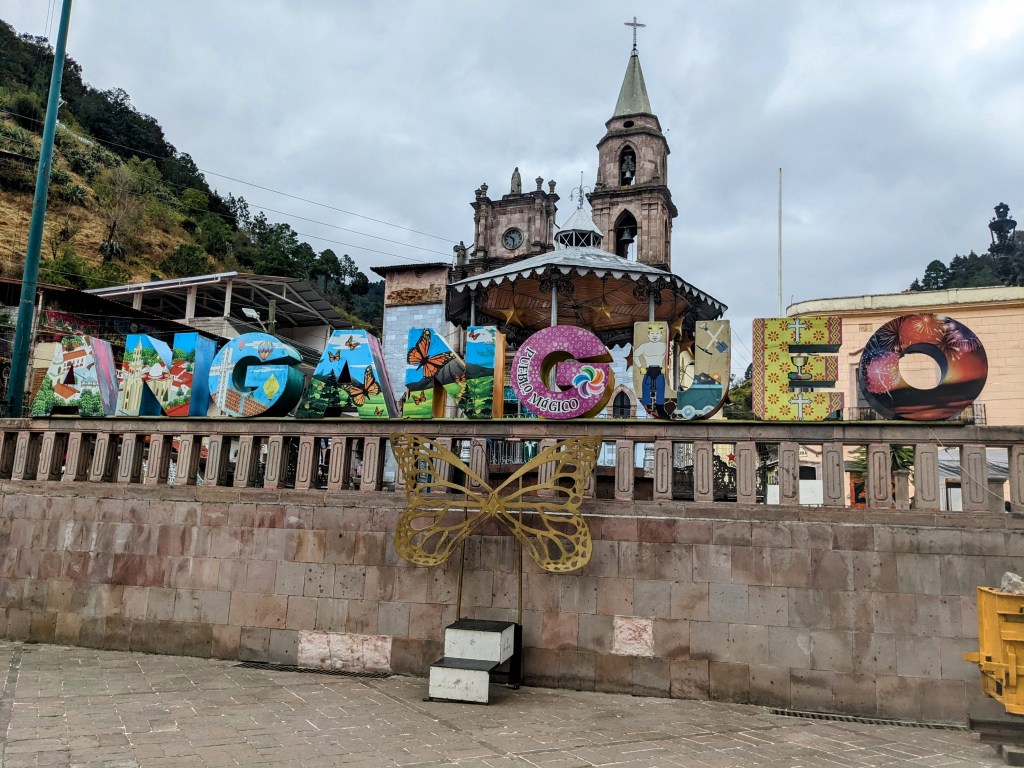
Our base camp for our visit was Mineral de Angangueo, a municipality located in Michoacán, a state in central Mexico. It began as a mining community in the very late 18th century. Eventually, the mines were depleted. It’s proximity to two Monarch butterfly sanctuaries, Sierra Chincua and the more famous, El Rosario, has brought the town some tourism. Evidence of the Monarch’s influnce is everywhere, from murals and decor, to a locally brewed beer.
We mounted our horses, with our guides holding the ropes. The day was cold, damp and misty at El Rosario, the monarch butterfly sanctuary located in the Oyamel fir forested mountains in Michoacán. The horses labored up the steep paths. I could hear birds I have never heard before calling to each other in the misty mountain forest. The guides were steadfast and never broke stride. Strong, fit, and in amazing cardiovascular condition…how many times a day do they lead tourists up on these horses at such high altitudes? We dismounted our horses at a plateau and made our way up the sloping trail. At 10,000 feet, (3,000 m)above sea level, I could feel my heart beating faster and a wave of lightheadedness tickled at my brain. Breathing became more labored. I slowed my steps to steady myself and took some deep, full breaths.
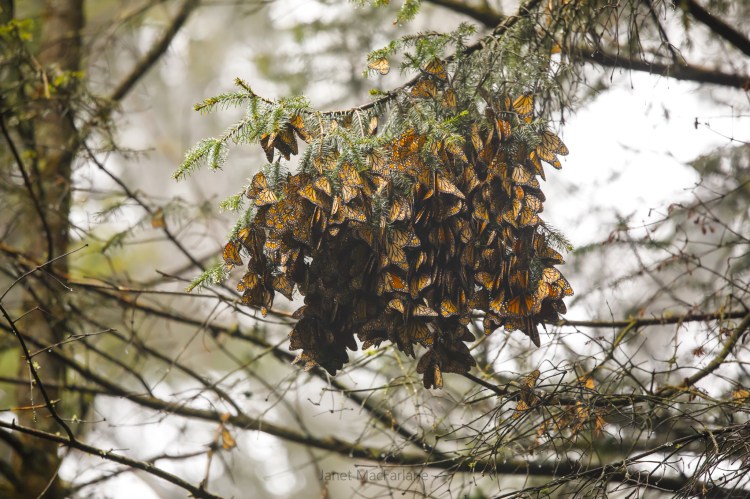
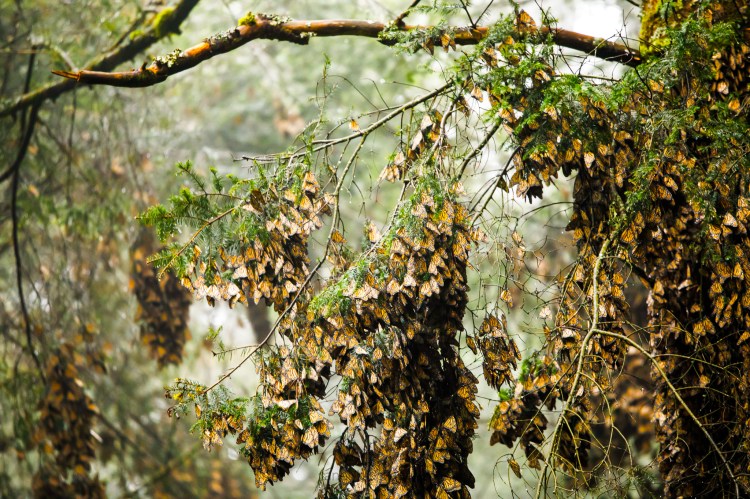
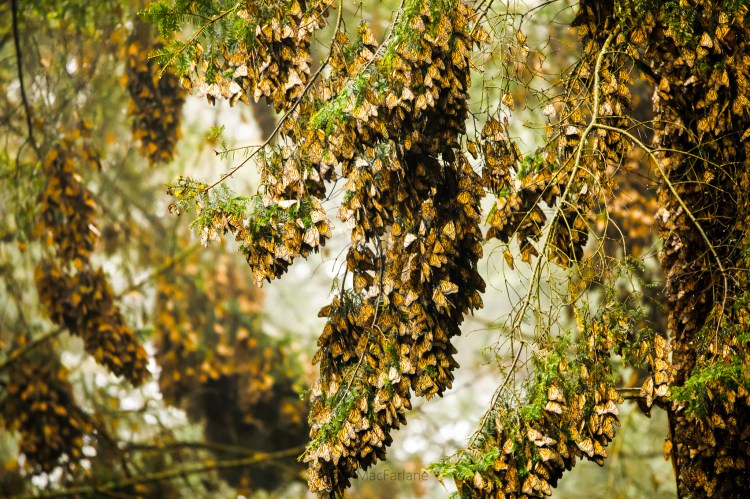
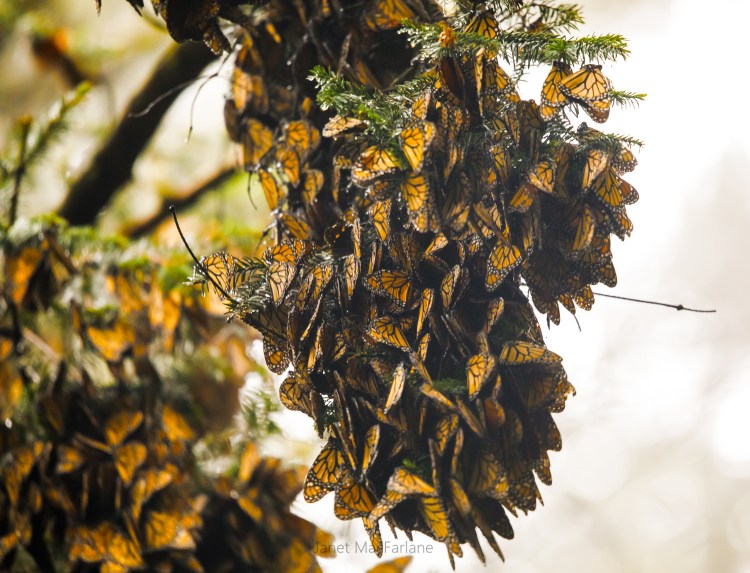
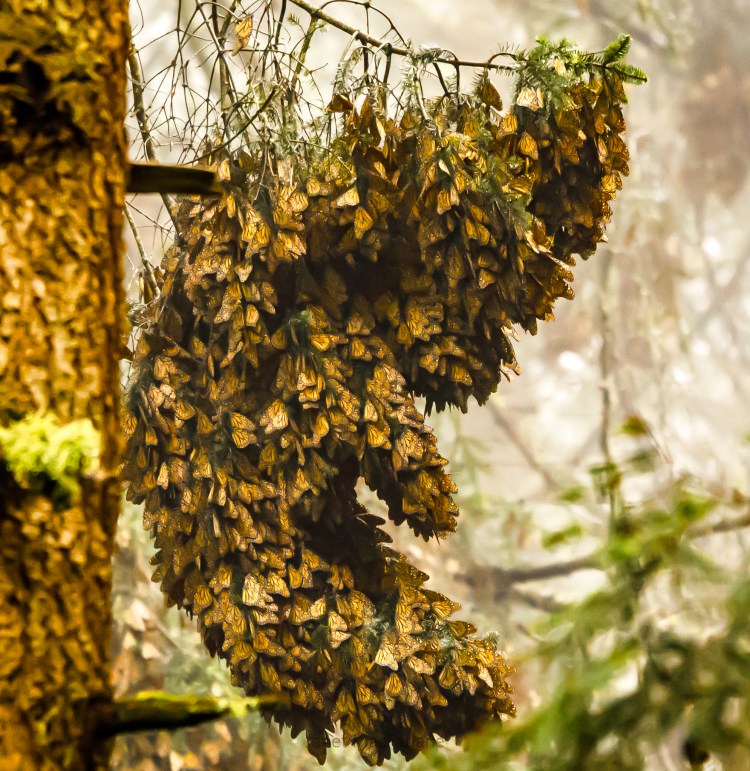
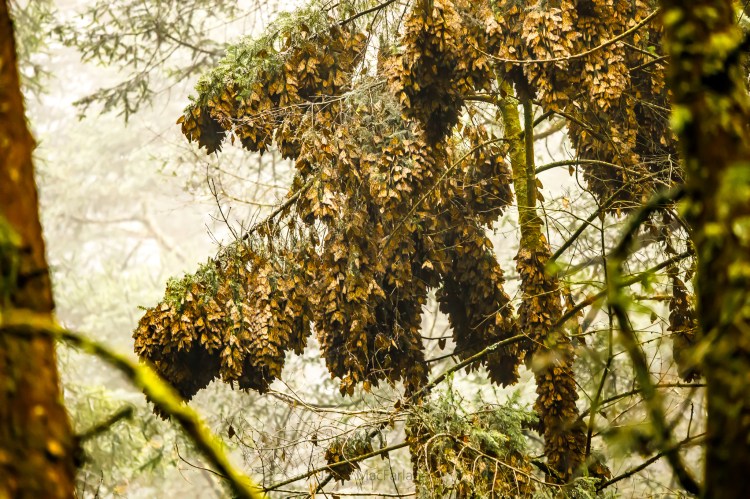
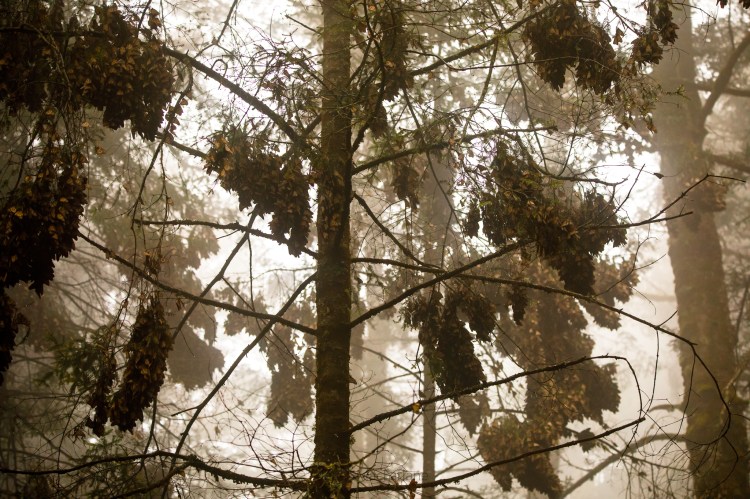
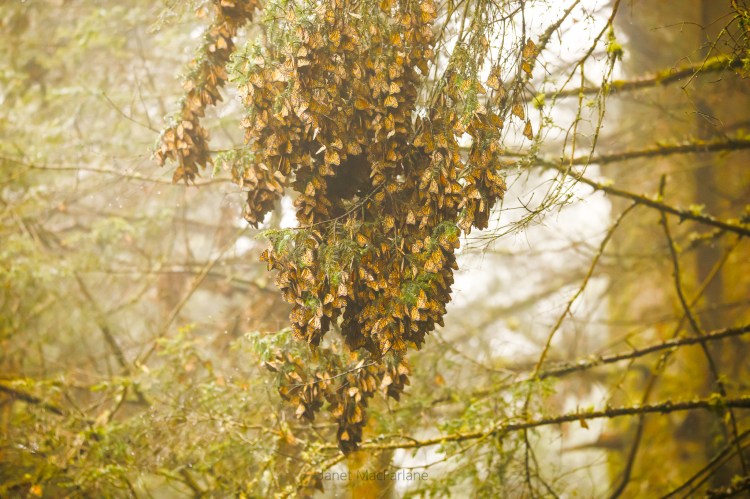
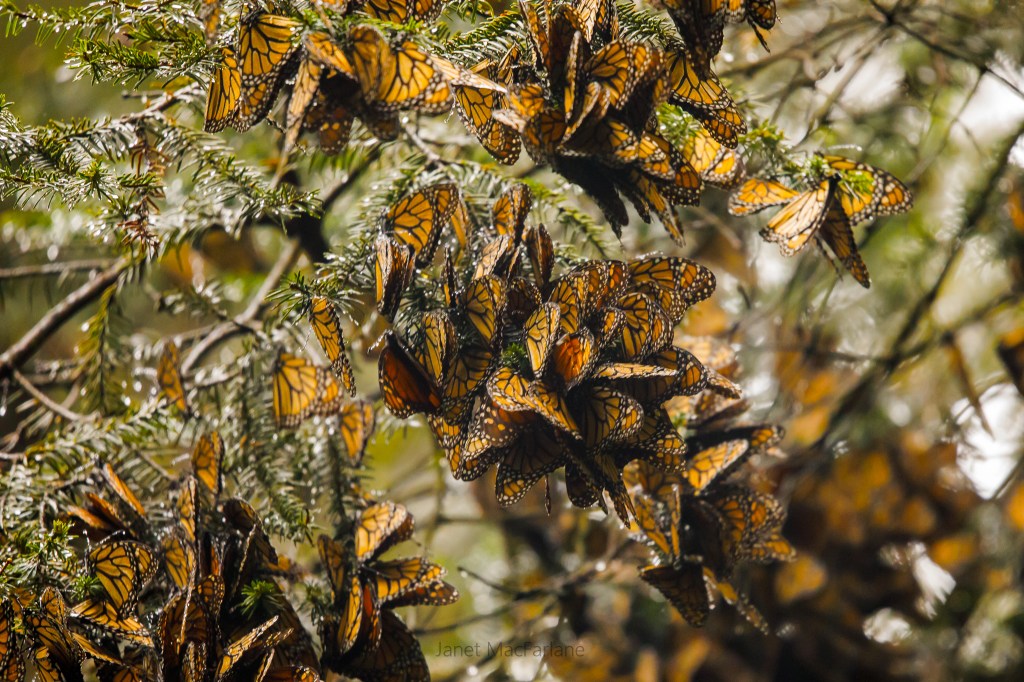
The forest was green and damp and filled with life. A cool mist blanketed the canopy. It was like walking through clouds. Peering at the forest around us, what seemed like clumps of leaves hanging from the trees were actually mounds and clusters of monarch butterflies. They were massed together, huddling, retaining heat and energy. I was in awe.
The Monarch Biosphere Reserve contains most of the over-wintering grounds for the majority of North America’s Monarch Butterflies. This World Heritage Site, is the lush, rich mountain forests that the Monarchs return, year after year, to shelter before beginning their life cycles and journeys again and again. The biosphere is a critical habitat for the monarch butterflies. Many people, especially the local people, seek to understand and protect this special place. The project Dr. MacFarlane and Dr. Mota-Sanchez are working on, is in collaboration with the local ejidos, the indigenous communal land owners and managers. Dr. Mota-Sanchez has deep connections with the people here and is an entomolygist who is passionate about the monarch butterly. My husband, Dr. David MacFarlane, an expert in forest measurements, has come up with ways to better estimate the number of monarch butterflies in the overwintering grounds using advanced forest measuring techniques. These methods will also enable the people to better understand the forests and the habitat that is most suited to the Monarchs. These data collection skills are being taught to local individuals. The research will enable the communities to better manage their forests for the monarchs and their own livliehood. It will also help them apply for funding from government agencies and non-profits. Their intention for this trip was to meet with local leaders and organizations to develop relationships and promote the use these measuring techniques within the biosphere. In the video below, Dr. MacFarlane and Dr. Mota-Sanchez explain more.
Monarch Butterflies are a source of wonder and amazement to many people, including myself. Their journeys are astounding. Each year, the 3,000 mile journey is made from their summer breeding grounds in Canada and the US to their over-wintering grounds in the mountainous forests of Central Mexico. Year after year, decade after decade, these beings return to this special place and then repeat the journey once more. The indigienous people of the mountain forest communities have always revered the monarchs. According to folklore, the monarchs carried the souls of ancestors coming to visit. As their migration cooincides with the Day of the Dead celebrations, Monarch imagery is intertwined with the symbolism and practices.
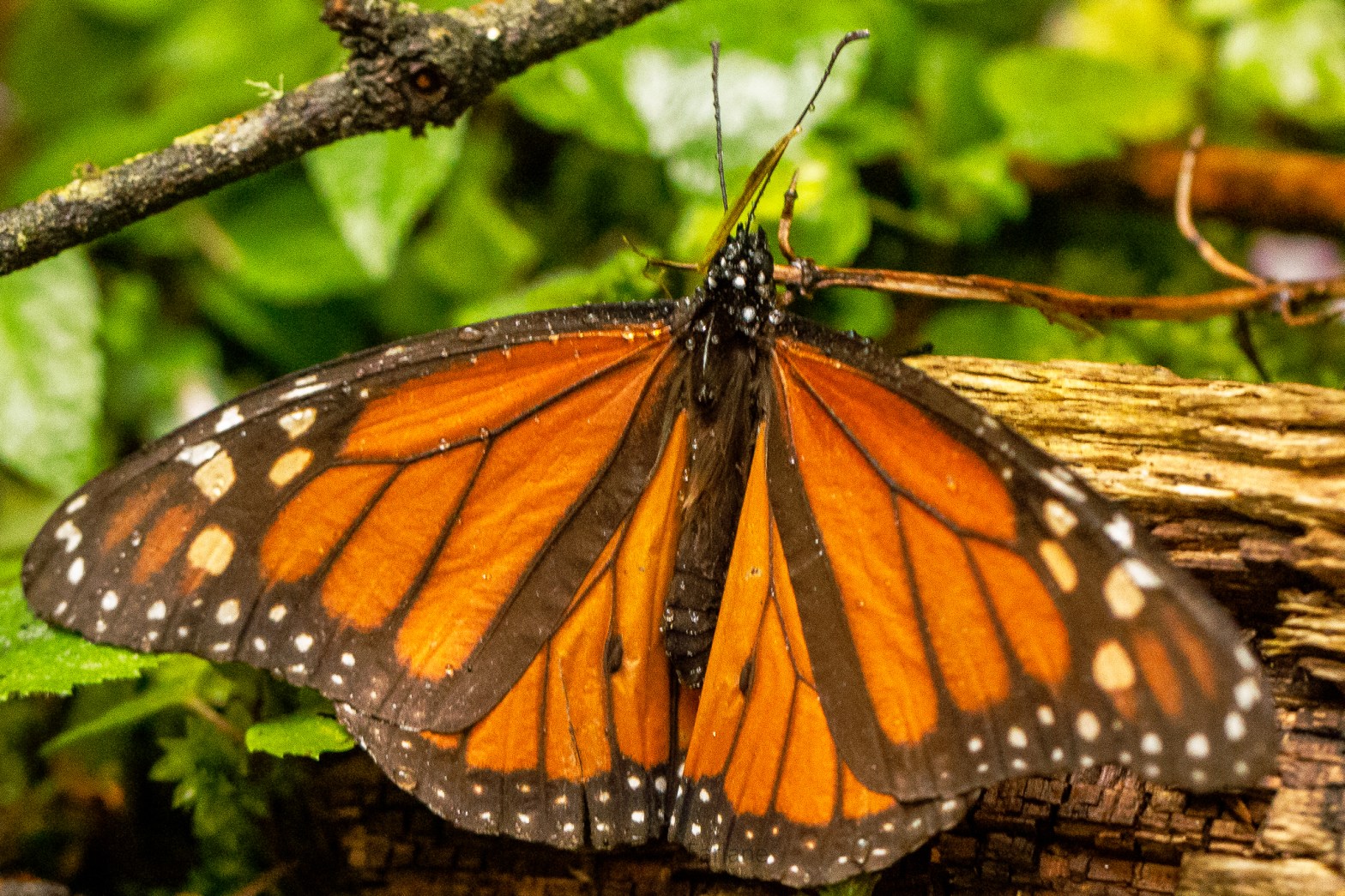
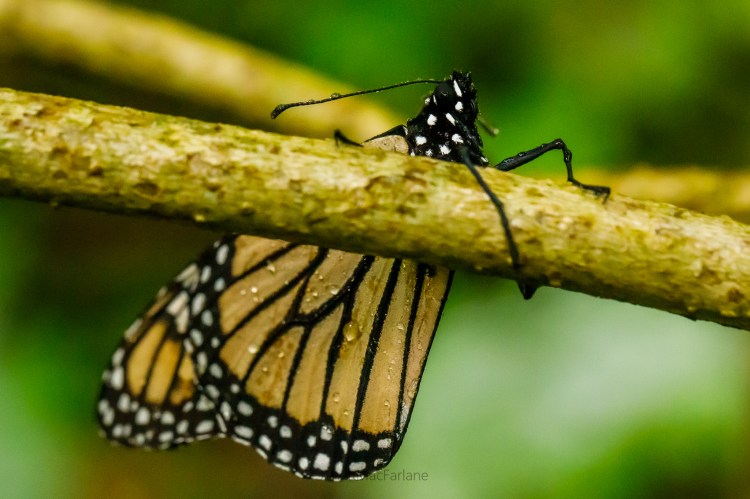
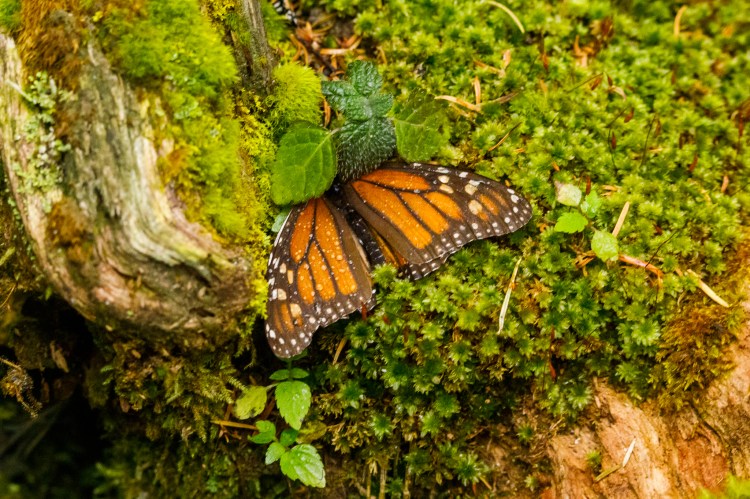
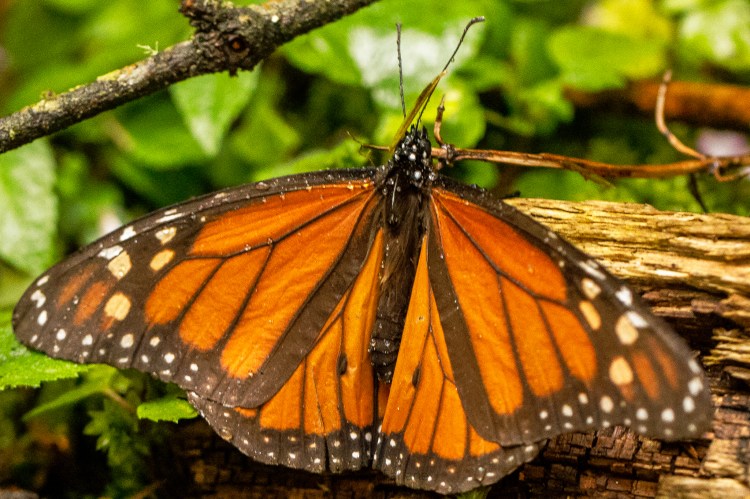
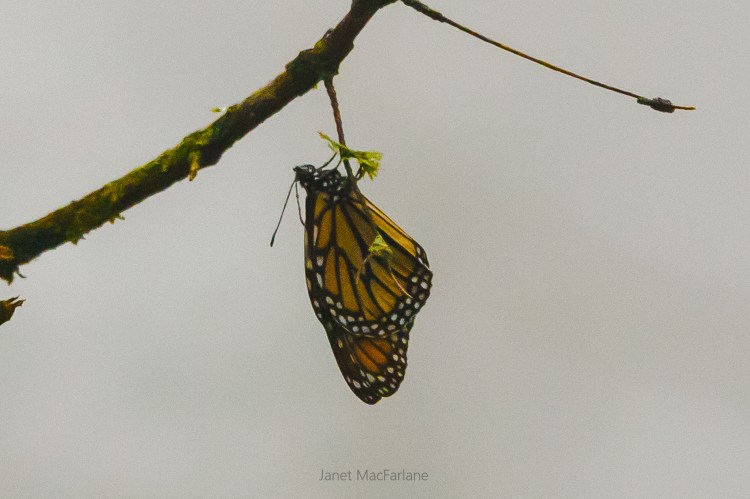
To say this was an amazing experience, is an understatement. I feel so fortunate to have been given the opportunity to tag-along and photograph these special beings. While the temperatures were not ideal, nor did I get to see them flying around en masse, I did get to witness the monarchs “wintering”-huddling together to stay warm. Anyone who has lived through a freezing cold winter, knows the feeling! As you go through the slides, you will see masses and individuals. Some may not make it, especially if they can not get enough energy up to return to a cluster. Most will survive, and the magic will begin once more! Their migration and life cycles is beyond miraculous.





 Forest Therapy and Forest Bathing Walks
Janet,
This is so very cool! Thank you for sharing the story, pictures, and videos. Butterflies are amazing, and this journey that the Monarchs take every year has fascinated me for years.
Jennifer
Thanks, Jen! It really was an amazing experience!